 Crowns and bridges, colloquially known as caps, can be made of different materials. They can be made on prepared teeth or as a replacement on an implant.
Crowns and bridges of metal-ceramic have a metal base with layers of ceramic built on it. They give satisfactory aesthetic and functional results, but because of the metal base they do not transmit light the way natural teeth do, so the difference between the crown and the natural teeth can be noticeable — which matters especially in the aesthetic region of the upper jaw.
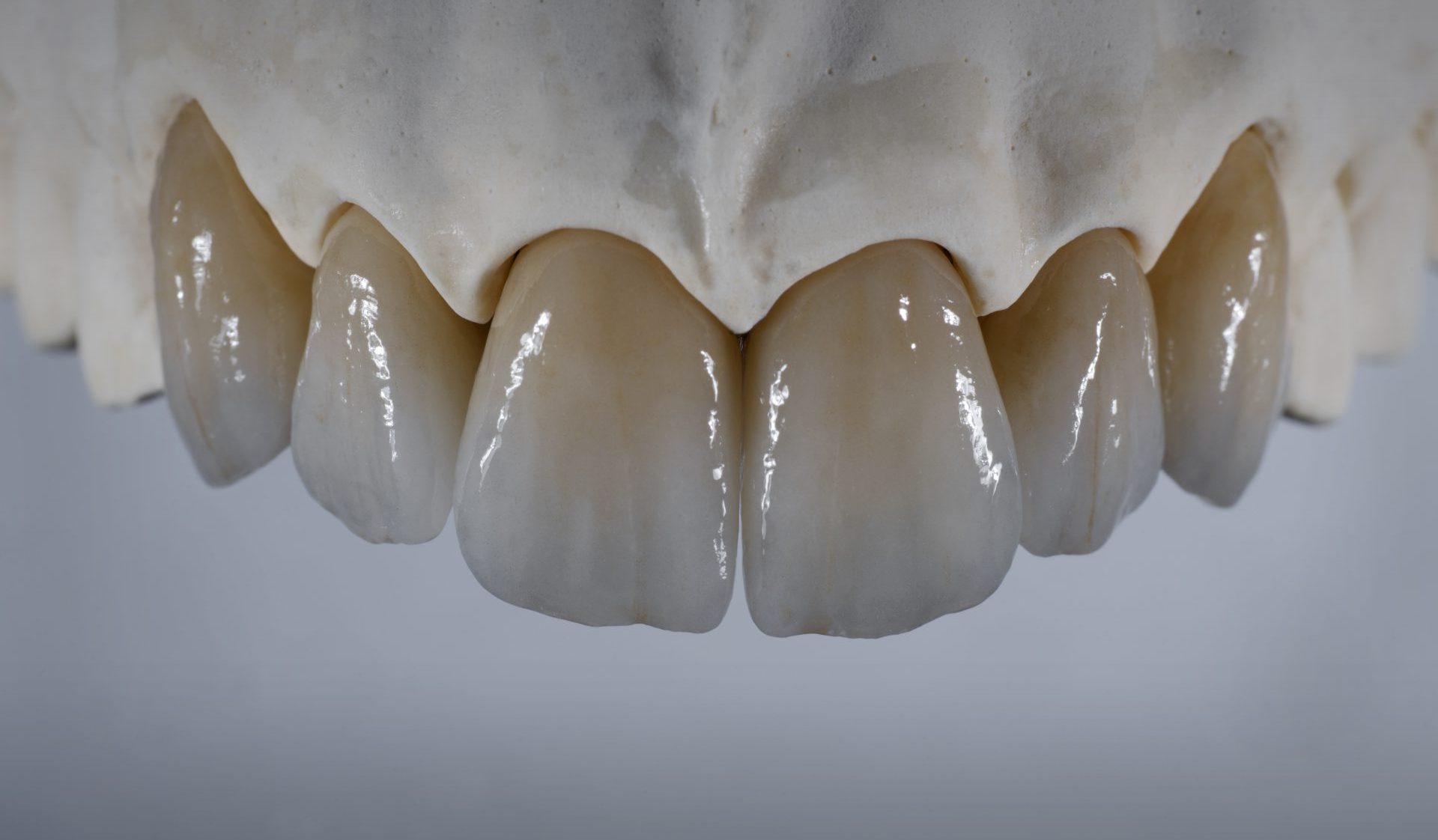
It is in that region that metal-free crowns based on zirconia are recommended: zirconia is white and gives crowns a natural appearance in daylight. And when the gums recede over time, no dark line appears around a zirconia crown as it can with metal-ceramic. Because of the good mechanical properties of zirconia, crowns can be made for the back teeth and on implants too.
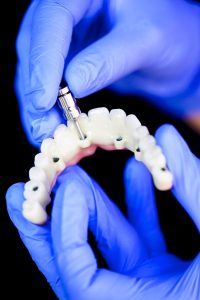
Crowns, whether metal-ceramic or zirconia, can be attached to implants in two ways — by cementing or with a screw — which the dentist decides together with the dental technician. The part the crown is cemented to, the abutment, is screwed into the implant and can also be made of zirconia or titanium.
For restorations on a large number of implants we also recommend Bio HPP (High-Performance Polymer). What makes it stand out is an elasticity close to that of bone — which matters a great deal given the forces implants take when chewing — along with its biocompatibility, its stability, the high polish it takes, which prevents plaque build-up and discolouration, and its aesthetic qualities.